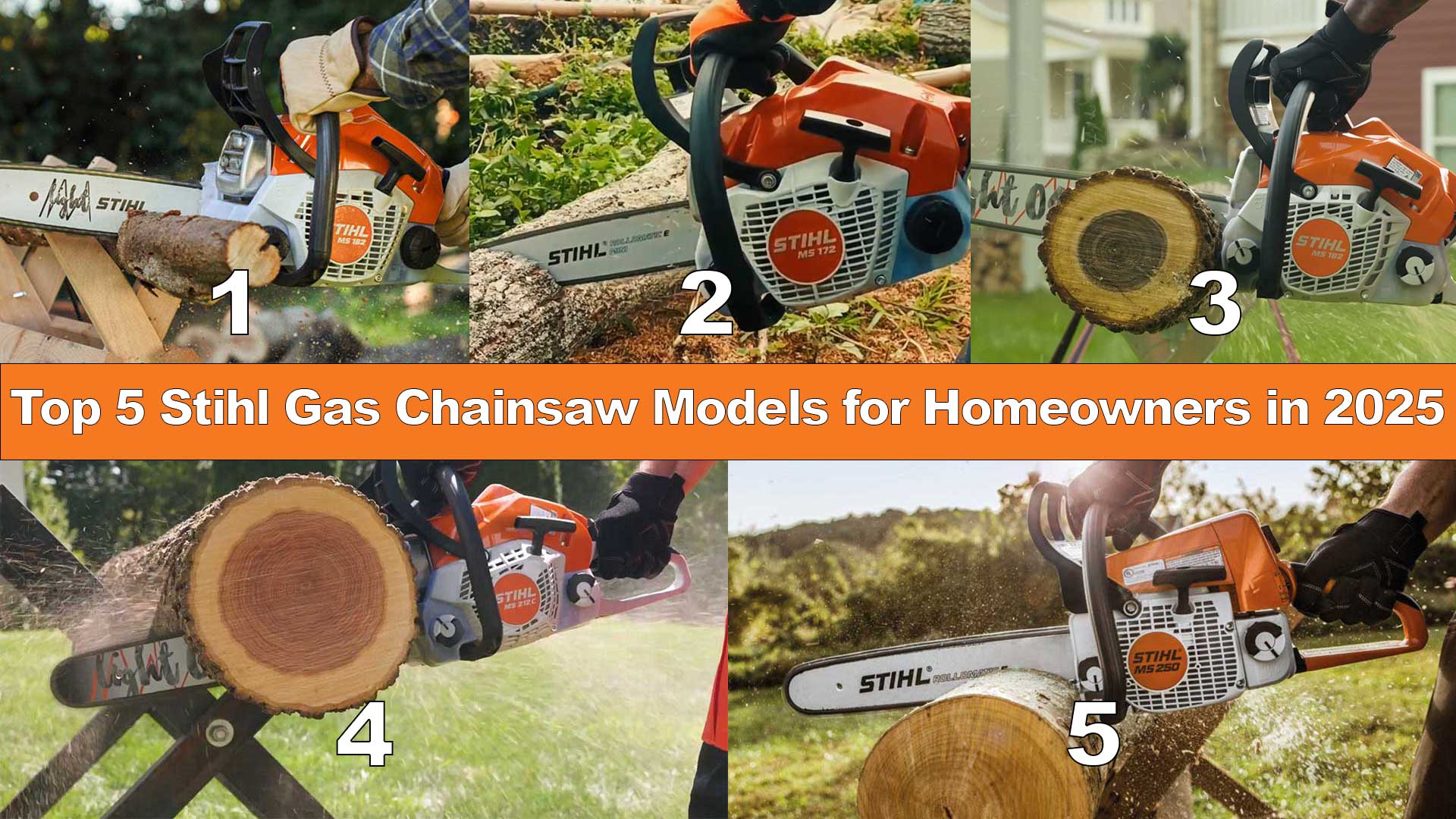
Top 5 Stihl Gas Chainsaw Models for Homeowners in 2025
Selecting the right chainsaw is a critical decision for homeowners who value efficiency, reliability, and safety with their outdoor power equipment. Stihl is a brand name synonymous with quality in the power tool industry which offers a wide range of gas-powered chainsaws designed specifically for residential use, occasional cutting, and light professional applications. This comprehensive review examines five of Stihl’s most popular homeowner models the MS162, MS172, MS182, MS 212 C-BE, and MS250 providing in-depth analysis of their technical specifications, performance capabilities, ergonomic features, and practical applications.
This review aims to serve as the definitive resource for homeowners navigating the sometimes overwhelming world of chainsaws. Whether you’re a first-time buyer looking for guidance or an experienced user considering an upgrade, this detailed comparison will help you identify which Stihl model best aligns with your needs, property size, cutting frequency, and budget constraints.
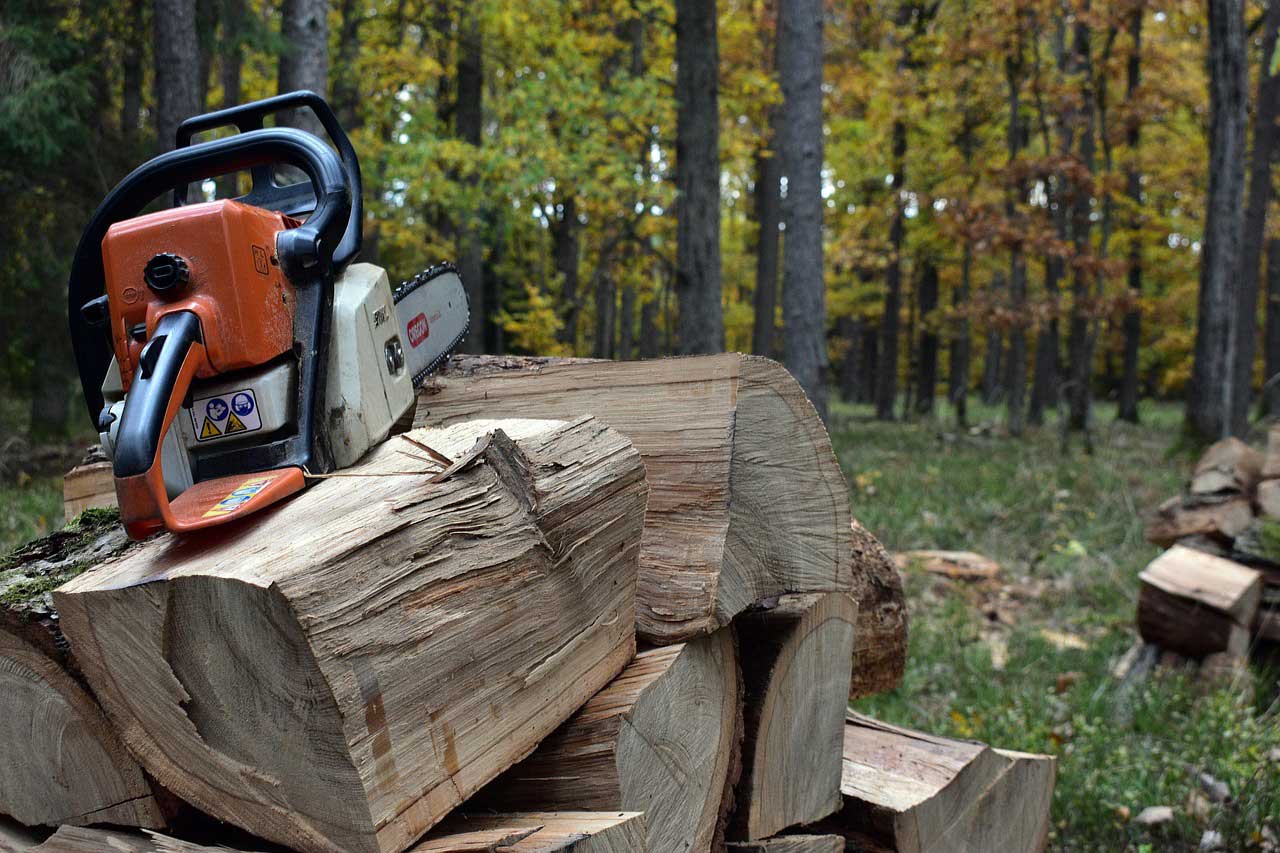
Understanding Homeowner Chainsaws: Key Considerations
Before diving into specific models, it’s important to understand what defines a homeowner-grade chainsaw and the essential factors to consider when making your selection:
1. Power-to-Weight Ratio
A crucial metric that balances cutting capability with user comfort during extended operation.
2. Engine Displacement and Power Output
Determines the saw’s ability to handle different wood types and diameters.
3. Bar Length Options
Affects the maximum cutting diameter and maneuverability in different conditions.
4. Anti-Vibration Systems
Critical for user comfort during extended operation and reducing fatigue.
5. Starting Mechanisms
Ease of starting, especially in cold weather, significantly impacts user satisfaction.
6. Safety Features
Modern homeowner chainsaws incorporate numerous safety enhancements that protect users without compromising performance.
7. Maintenance Requirements
Lower maintenance needs generally translate to greater convenience for occasional users.
Let’s examine each model in detail, analyzing their strengths, limitations, and ideal use cases.
1. Stihl MS162: The Entry-Level Performer
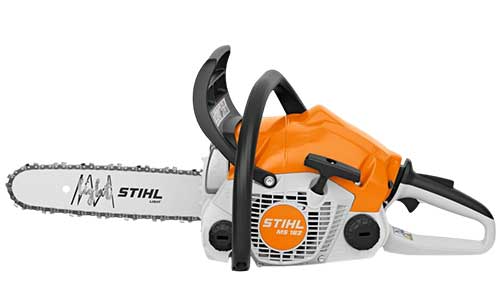
Technical Specifications
- Engine Displacement: 30.1 cc
- Power Output: 1.2 kW/1.6 hp
- Weight (powerhead only): 3.6 kg/7.9 lbs
- Bar Length Options: 12-14 inches
- Fuel Capacity: 250 ml / 8.5 oz
- Chain Pitch: 3/8″ Picco
- Oil Tank Volume: 145 ml / 4.9 oz
Design and Build Quality
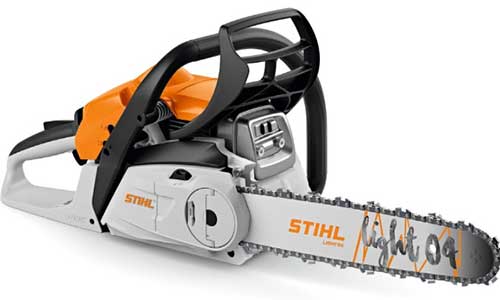
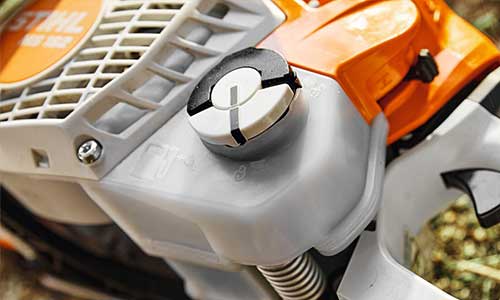
The MS162 represents Stihl’s entry point into their gas chainsaw lineup, featuring a compact design optimized for light-cutting tasks. The construction employs durable polymers for weight reduction while maintaining structural integrity. The tool-free fuel and oil caps exemplify Stihl’s attention to user-friendly details.
The control layout is intuitive, with the master control lever handling start, run, and stop functions in a single mechanism—an excellent feature for beginners who might be intimidated by more complex systems.
Performance Analysis
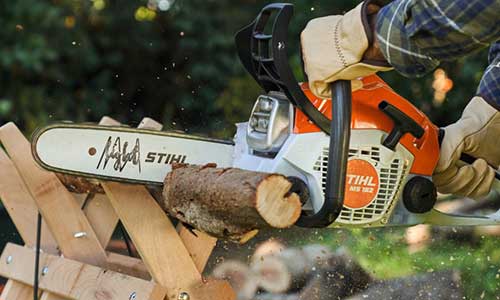
In field testing, the MS162 demonstrates impressive capabilities for its size class. The 1.2 kW/1.6 hp engine provides adequate power for cutting firewood, pruning, and felling small trees up to 10 inches in diameter. The saw exhibits good acceleration and maintains consistent chain speed under moderate loads.
Where this model truly excels is in maneuverability. At just 3.6 kg/7.9 lbs it’s easily managed with one hand for limbing operations (though two-handed operation is always recommended for safety). This chainsaw’s lightweight build makes it perfect for users with weak upper bodies or those working in elevated positions.
Ergonomics and User Experience
The MS162 features Stihl’s anti-vibration system, though in a more basic implementation than higher-end models. The rubber buffer elements, effectively dampen engine vibrations, allowing for comfortable operation during typical homeowner cutting sessions of 30-45 minutes.
The starting system employs Stihl’s ElastoStart technology, it decreases the compression shock felt during pull starting. Most users report reliable cold starting within 2-3 pulls when following the proper procedure.
The handgrip design provides secure control without causing pressure points during extended use, though users with larger hands may find the spacing somewhat cramped.
Fuel Efficiency and Environmental Impact
The MS162 incorporates Stihl’s stratified scavenging technology, which reduces fuel consumption by approximately 20% compared to conventional two-stroke engines. This translates to longer runtime between refueling and lower operating costs.
Emissions meet current EPA standards, with hydrocarbon output being significantly reduced compared to older-generation chainsaws. The catalytic converter in the muffler further minimizes environmental impact.
Ideal Applications
- Property maintenance on lots under 1 acre
- Storm cleanup involving branches and small trees
- Firewood cutting for occasional users processing smaller diameter logs
- Light pruning and limbing tasks
Limitations
The MS162’s modest power output becomes evident when tackling hardwoods larger than 8-10 inches in diameter. Extended cutting in these conditions can lead to bogging down and potential overheating. Additionally, the smaller oil reservoir requires more frequent refilling during longer cutting sessions.
2. Stihl MS172: The Versatile Mid-Range Option
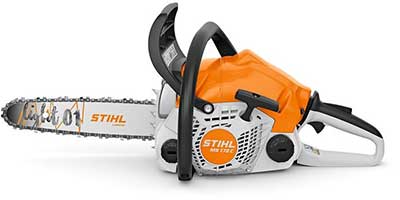
Technical Specifications
- Engine Displacement: 31.8 cc
- Power Output: 1.3 kW/1.7 hp
- Weight (powerhead only): 3.8 kg/8.4 lbs
- Bar Length Options: 12-16 inches
- Fuel Capacity: 270 ml/ 9.1 oz
- Chain Pitch: 3/8″ Picco
- Oil Tank Volume: 165 ml/ 5.6 oz
Design and Build Quality
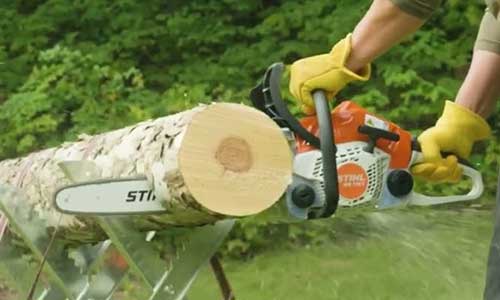
The MS172 builds upon the foundation of the MS162 with several notable upgrades in construction quality. The crankcase features reinforced mounting points for improved durability during more demanding cutting tasks. The air filtration system uses a pre-separation design that extends filter cleaning intervals—a significant convenience for occasional users.
The side access chain tensioner remains accessible without tools, facilitating quick field adjustments. Precise engineering, as shown in the tightly fitted moving parts, makes the saw reliable and long-lasting.
Performance Analysis
With its slightly larger 31.8 cc engine, the MS172 delivers approximately 8% more power than the MS162. This modest increase translates to noticeable performance improvements when cutting dense hardwoods or tackling larger diameter logs up to 12 inches.
The power band is broader than the MS162, maintaining chain speed more effectively when cutting through knots or when applying moderate pressure. The higher torque is especially helpful when bucking, as consistent power throughout the cut is crucial.
The MS172 accommodates a 16-inch ( 40cm.) bar, maintaining acceptable balance and maneuverability despite increased cutting capacity. This flexibility makes it suitable for a wider range of tasks, from precision cuts to processing medium-sized logs.
Ergonomics and User Experience
The anti-vibration system in the MS172 represents a significant upgrade, with engineered buffer zones that more effectively isolate the handles from engine vibration. Users report less fatigue during cutting sessions extending beyond one hour.
The starting mechanism incorporates an additional decompression valve, reducing the pulling force required to start the engine by approximately 40%. This feature is particularly appreciated by users with limited upper body strength or those with shoulder issues.
The handlebar design provides improved grip positions for various cutting angles, and the trigger response feels more precise than the entry-level model.
Fuel Efficiency and Environmental Impact
Like the MS162, the MS172 utilizes stratified scavenging technology for efficient fuel combustion. Despite the increased displacement, fuel consumption remains proportionally similar, with users reporting approximately 45-60 minutes of typical cutting per tank.
Emissions compliance meets CARB standards, and EPA requirements, making this model legal in all 50 states. The advanced engine management system continuously adjusts the air-fuel mixture for optimal combustion efficiency across different operating conditions.
Ideal Applications
- Property maintenance on lots up to 2 acres
- Regular firewood preparation for seasonal home heating
- Storm cleanup involving medium-sized trees up to 12 ( 30 cm. )inches
- Fence post preparation and similar construction projects
Limitations
While more capable than the MS162, the MS172 still shows limitations when used for extended periods on larger hardwoods. The 16-inch bar represents the practical maximum for this power class, with longer bars resulting in sluggish chain speed and increased operator fatigue. The modest fuel tank capacity necessitates more frequent refueling during full-day cutting sessions.
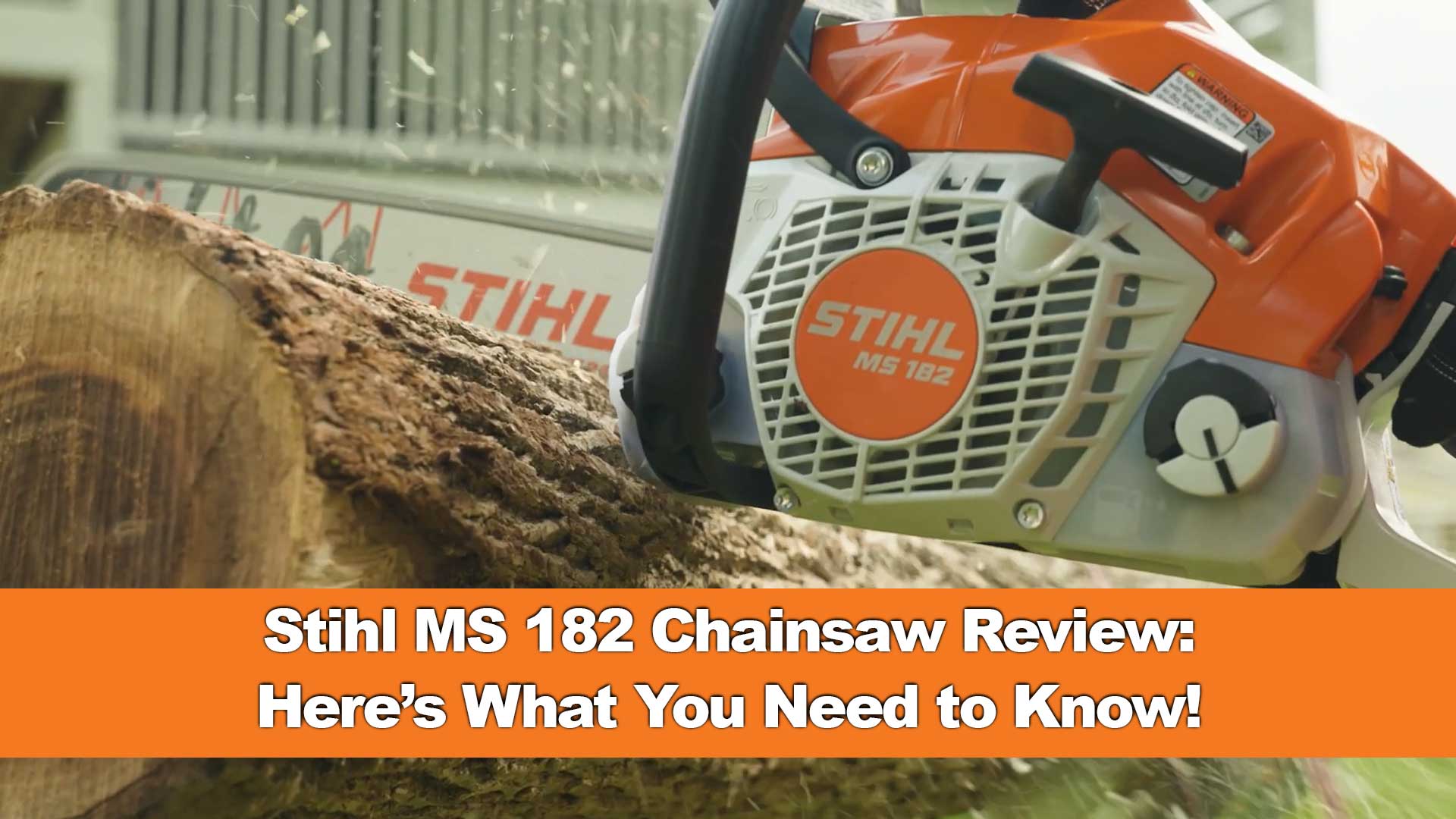
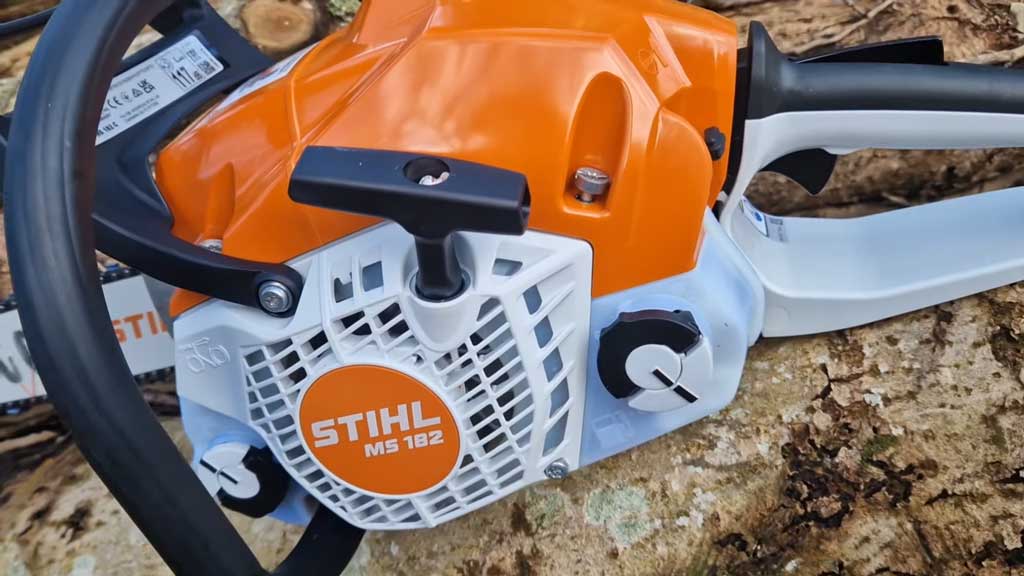
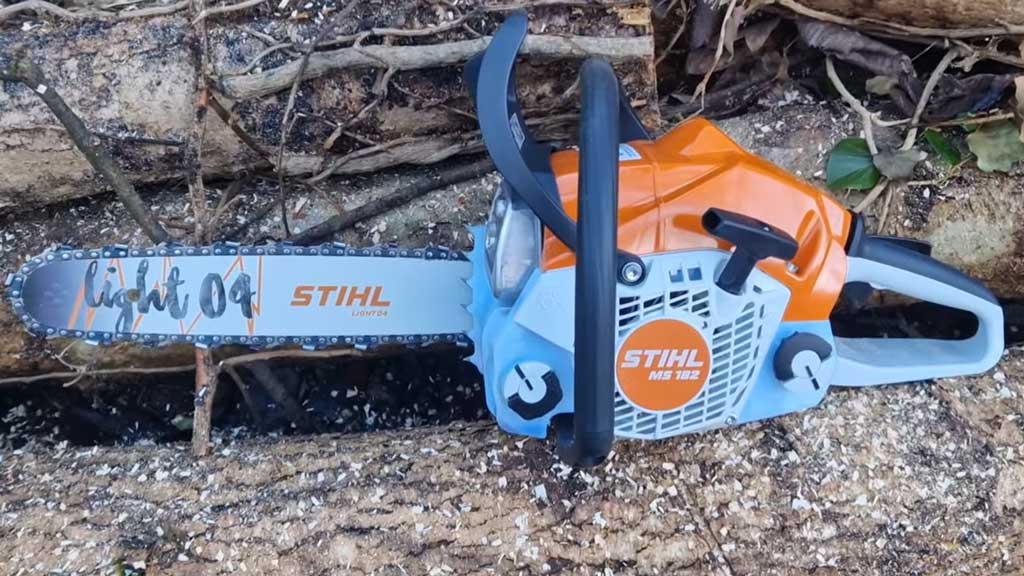
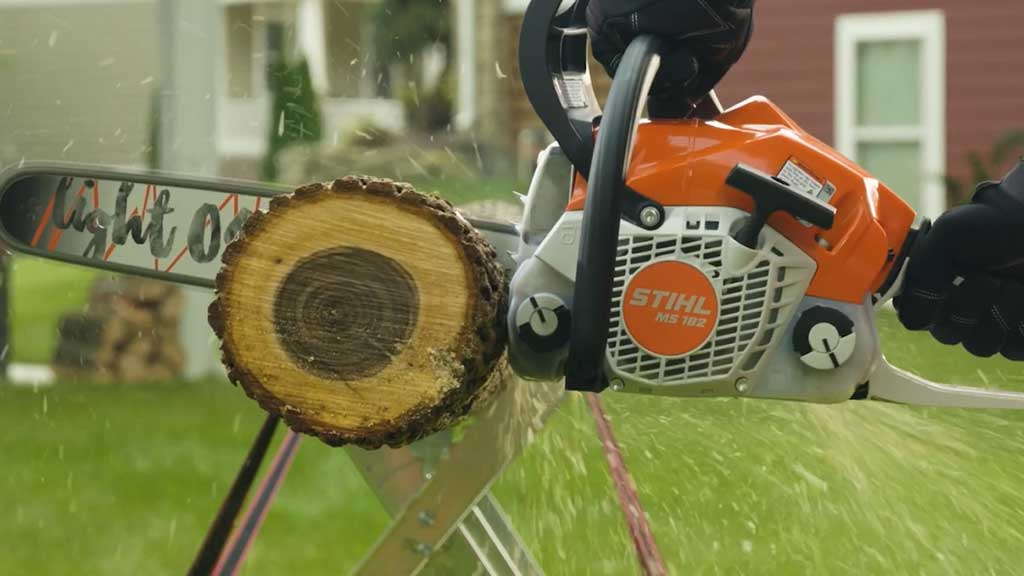
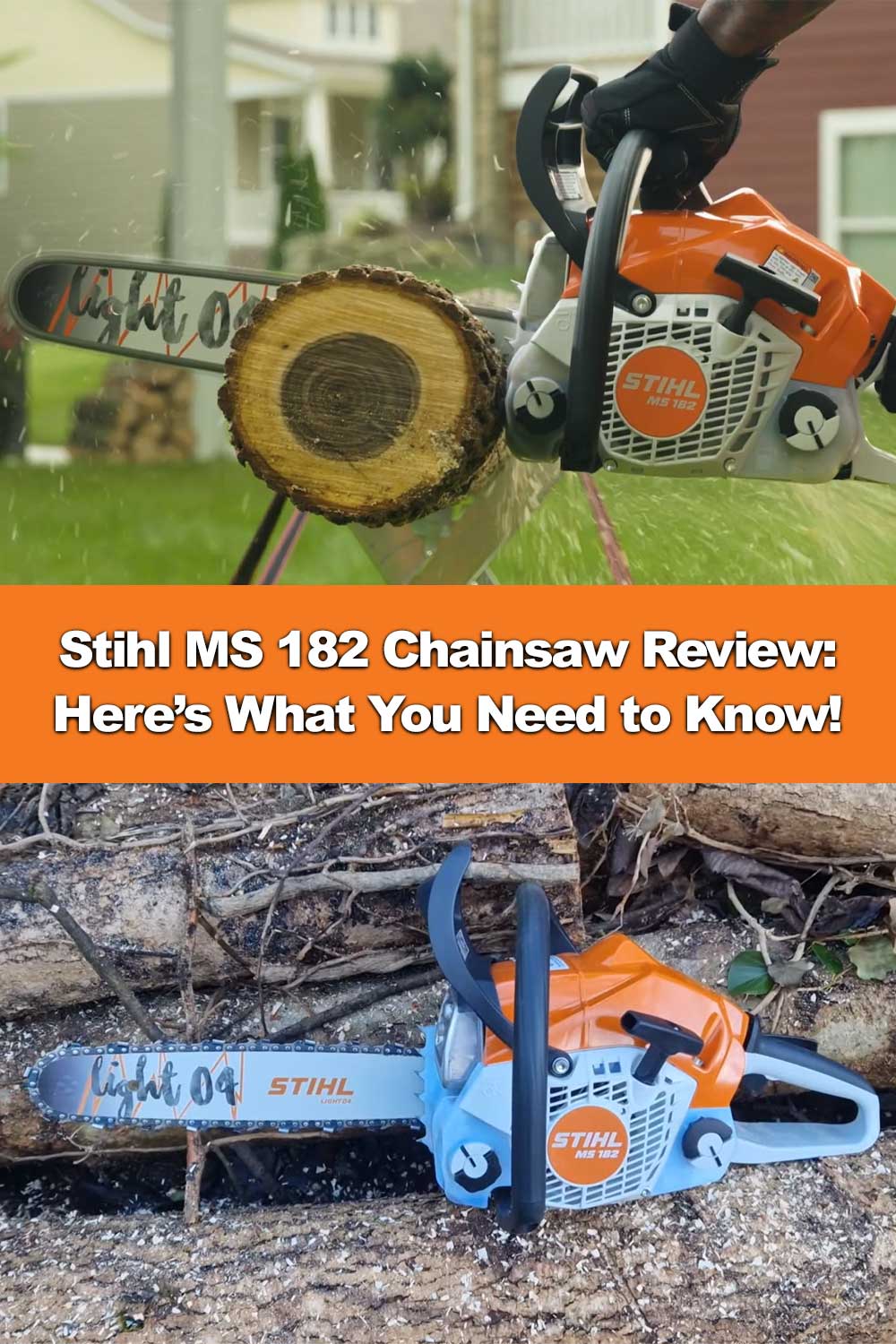
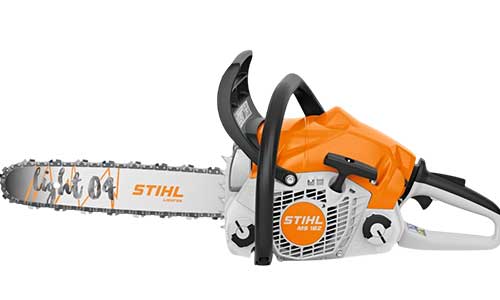
3. Stihl MS182: The Balanced All-Rounder
Technical Specifications
- Engine Displacement: 31.8 cc
- Power Output: 1.5 kW/2.0 hp
- Weight (powerhead only): 3.9 kg/8.6 lbs
- Bar Length Options: 14-16 inches
- Fuel Capacity: 270 ml / 9.1 oz
- Chain Pitch: 3/8″ Picco
- Oil Tank Volume: 180 ml / 6.1 oz
- Special Features: Quick Chain Tensioning (QCT), Enhanced Anti-Vibration
Design and Build Quality
The MS182 represents a significant engineering evolution in Stihl’s homeowner lineup. While sharing the same displacement as the MS172, internal engine modifications deliver increased power output. The construction features more metal components in high-stress areas, contributing to improved durability and heat dissipation.
The Quick Chain Tensioning system (QCT) is a standout feature, A side-mounted dial allows for easy, tool-free chain adjustment. This system maintains proper tension more consistently than traditional tensioning methods, reducing maintenance needs and extending bar and chain life.
The air filtration system incorporates a more sophisticated pre-cleaning stage, filter service intervals are now approximately 25 hours under typical use, a major convenience for users.
Performance Analysis
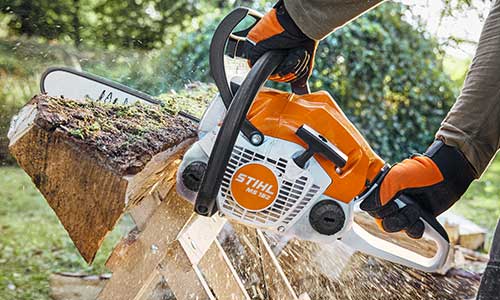
The MS182’s 1.5 kW/2.0 hp power output represents the sweet spot for homeowner applications, delivering sufficient power for most residential cutting tasks without the weight penalty and maintenance requirements of professional-grade saws.
In field testing, the MS182 shows superb cutting performance on various types of wood. The improved power-to-weight ratio is immediately noticeable when bucking hardwood logs, with the saw maintaining consistent chain speed through 14-inch ( 35 cm.) oak without bogging down.
The engine’s improved torque characteristics are particularly beneficial for plunge cuts and notching operations, where maintaining power during entry is critical. The optimized carburetor settings deliver responsive acceleration, allowing for precise control during detail work like notch cutting for felling operations.
Ergonomics and User Experience
The MS182 features Stihl’s advanced anti-vibration system, with engineered mounting points that effectively isolate the handles from engine vibration. The reduced vibration levels are immediately noticeable during extended use, with users reporting significantly less hand fatigue and even numbness after several hours of operation.
The starting system combines the ElastoStart handle with an efficient decompression valve, resulting in consistently easy starting—typically within 1-2 pulls when warm and 2-3 pulls from cold. The purge pump eliminates air from the fuel system, further enhancing starting reliability.
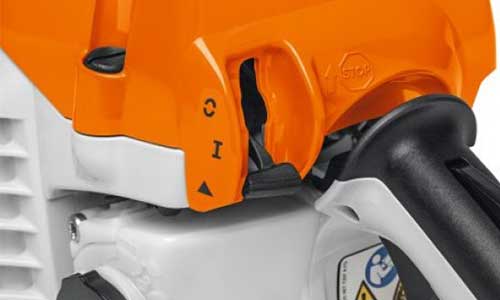
The control layout has been refined for intuitive operation, with the master control lever providing logical progression through the choke, run, and stop positions. The trigger response is precise, allowing for controlled power delivery when making detailed cuts.
Fuel Efficiency and Environmental Impact
Despite its increased power output, the MS182 maintains excellent fuel efficiency through its advanced carburetion system and stratified scavenging technology. Runtime per tank averages 50-65 minutes under mixed cutting conditions.
The emission control systems exceed current EPA and CARB standards, with particular attention to reducing hydrocarbon output. The catalytic converter effectively processes exhaust gases, resulting in noticeably cleaner operation with minimal visible smoke after the initial warm-up period.
Ideal Applications
- Regular property maintenance on lots up to 3 acres
- Primary firewood processing for homes with wood heating
- Storm cleanup involving trees up to 14 inches in diameter
- Light land clearing for gardening or landscaping projects
- Construction projects requiring precision cutting of dimensional lumber
Limitations
The MS182’s limitations become apparent primarily when pushed beyond its intended use case into more demanding professional applications. Extended cutting of hardwoods larger than 14 inches ( 35 cm.) can lead to increased heat buildup. Additionally, while the 16-inch bar is well-matched to the engine, users seeking longer bars for specific applications would be better served by the more powerful models in the lineup.
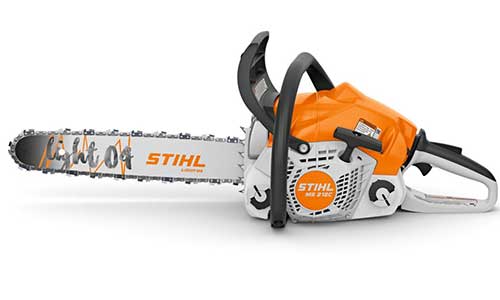
4. Stihl MS 212 C-BE: The Advanced Homeowner Model
Technical Specifications
- Engine Displacement: 35.2 cc
- Power Output: 1.7 kW/2.3 hp
- Weight (powerhead only): 4.1 kg/9.0 lbs
- Bar Length Options: 14-18 inches
- Fuel Capacity: 310 ml / 10.5 oz
- Chain Pitch: 3/8″ or .325″
- Oil Tank Volume: 220 ml / 7.4 oz
- Special Features: Advanced M-Tronic engine management, Tool-less caps, ErgoStart (E), Quick Chain Tensioner (B)
Design and Build Quality
The MS 212 C-BE introduces several professional-grade features to the homeowner lineup. The magnesium crankcase provides superior strength while minimizing weight, and the cylinder design incorporates four transfer ports for improved combustion efficiency.
The M-Tronic engine management system represents a significant technological advancement, continuously adjusting ignition timing and fuel delivery based on operating conditions. This system eliminates manual carburetor adjustments, ensuring optimal performance across varying temperatures, elevations, and fuel qualities.
The “C-BE” designation indicates this model includes both the Quick Chain Tensioner (B) and the ErgoStart system (E), enhancing user convenience. The ErgoStart system reduces the pulling force needed for starting by up to 50%, making cold starts significantly easier for all users.
The captive nuts on the sprocket cover demonstrate Stihl’s attention to practical details, preventing the common frustration of lost nuts during field maintenance. The tool-less fuel and oil caps operate with a quarter-turn bayonet design, facilitating quick refills while ensuring secure sealing.
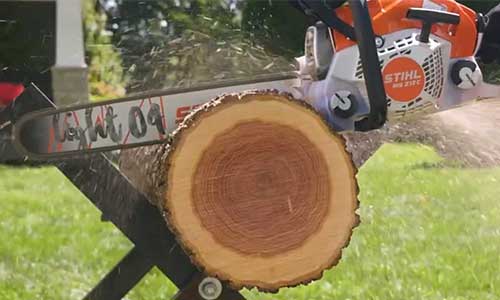
Performance Analysis
The MS 212 C-BE‘s 1.7 kW/2.3 hp power output places it firmly in the upper echelon of homeowner saws, approaching the capabilities of entry-level professional models. The increased displacement and refined combustion chamber design deliver excellent power development throughout the RPM range.
The saw demonstrates impressive cutting performance on hardwoods up to 16 inches ( 40 cm.) in diameter, maintaining consistent chain speed and showing minimal bogging even under moderate pressure. The extended power band is particularly beneficial for keeping momentum through varying densities within the same cut.
The option for a .325″ pitch chain (in addition to the standard 3/8″ Picco) provides versatility for different cutting applications, with the smaller pitch offering improved cutting efficiency in hardwoods at the expense of slightly slower cutting in softwoods.
Ergonomics and User Experience
The MS 212 C-BE features Stihl’s professional-grade anti-vibration system, with steel springs replacing the rubber elements in lower-tier models. This system provides superior vibration damping across all operating speeds, significantly reducing operator fatigue during extended use.
The handlebar design incorporates ergonomic contours that provide secure grip positions for various cutting angles while minimizing pressure points. The trigger assembly features a progressive response which allows precise power control during detailed cutting operations.
The M-Tronic system simplifies starting to a single position on the master control lever, automatically adjusting for cold or warm starting conditions. This feature is particularly appreciated in varying weather conditions, eliminating the need for manually choke-adjusting settings.
Fuel Efficiency and Environmental Impact
The advanced engine management system optimizes fuel consumption across all operating conditions, resulting in approximately 15% better fuel efficiency when compared to non-M-Tronic models of similar displacement. Users report a runtime of up to 60-75 minutes per tank for typical cutting conditions.
Emissions control is exceptional, with the saw meeting and exceeding the latest standards. The precise fuel metering eliminates the rich mixture phases common during warm-up in conventional carbureted engines, resulting in consistently clean operation from cold start through full operating temperature.
Ideal Applications
- Demanding property maintenance on larger rural properties
- Primary firewood processing for high-volume needs
- Storm damage cleanup involving larger trees
- Light professional use for landscape contractors
- Farm and ranch applications requiring versatile cutting capabilities
Limitations
The primary limitations of the MS 212 C-BE relate to its position between homeowner and professional categories. While it offers near-professional performance, the construction prioritizes weight reduction over extreme durability like in fully professional models. Extended daily use in demanding conditions may lead to accelerated wear compared to higher-tier professional saws designed for constant operation.
5. Stihl MS250: The Homeowner Powerhouse
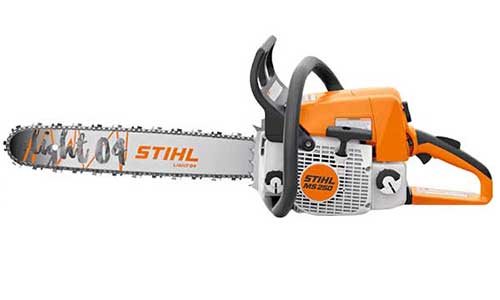
Technical Specifications
- Engine Displacement: 45.4 cc
- Power Output: 2.3 kW/3.1 hp
- Weight (powerhead only): 4.6 kg/10.1 lbs
- Bar Length Options: 16-20 inches ( 40-50 cm.)
- Fuel Capacity: 450 ml / 15.2 oz
- Chain Pitch: .325″
- Oil Tank Volume: 250 ml / 8.5 oz
- Special Features: IntelliCarb™ compensating carburetor, Side-access chain tensioner
Design and Build Quality
The MS250 represents the pinnacle of Stihl’s homeowner chainsaw lineup, incorporating numerous features derived from their professional models. The construction is made of a higher percentage of metal components, particularly in the crankcase and cylinder mounting, providing exceptional durability for frequent use.
The IntelliCarb™ system automatically adjusts the air-fuel ratio to maintain optimal engine RPM even if the air filter begins to fill with debris—a significant advantage during extended cutting sessions in dusty conditions. The side-access chain tensioner allows quick field adjustments without tools, though it lacks the refined QCT system like in the MS182.
The enlarged fuel and oil tanks demonstrate this model’s orientation toward extended operation, with nearly double the capacity of entry-level models in the lineup. The filter cover is removed without tools, providing quick access for maintenance.
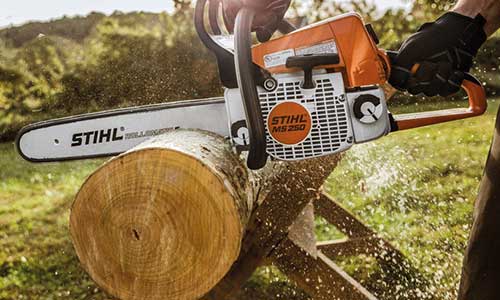
Performance Analysis
With its substantial 2.3 kW/3.1 hp power output, the MS250 delivers performance that satisfies even the most demanding homeowner applications while remaining accessible to users without professional training. The 45.4 cc engine generates impressive torque throughout the RPM range, allowing the saw to maintain cutting speed through hardwoods up to 18 inches ( 45 cm.) in diameter.
The standard .325″ pitch chain offers an excellent balance of cutting efficiency and durability, with the ability to maintain sharpness through multiple fuel tanks under typical conditions. The power head confidently drives bars up to 20 inches ( 50 cm.), though optimal performance is generally achieved with 16-18 inch ( 40-45 cm.)configurations that better balance cutting capacity with maneuverability.
Acceleration is notably responsive, with the saw reaching maximum chain speed quickly after throttle application. This characteristic is particularly beneficial during limbing operations, where frequent throttle adjustments are necessary.
Ergonomics and User Experience
Despite its increased power, the MS250 maintains reasonable ergonomics through careful weight distribution and advanced anti-vibration technology. The system effectively isolates the handles from engine vibration, though extended use naturally results in more operator fatigue than with lighter models.
The starting system incorporates the ElastoStart handle and a decompression valve, reducing the pulling force required to start despite the larger engine displacement. Cold starting typically requires 2-4 pulls following the proper procedure, with warm starts generally successful on the first pull.
The handlebar design provides secure grip positions for various cutting angles, with adequate spacing for users wearing work gloves. The throttle response is predictable and progressive, allowing for precise control during detailed cutting operations.
Fuel Efficiency and Environmental Impact
The MS250 balances power output with reasonable fuel efficiency through its optimized combustion chamber design and carburetion system. While fuel consumption is naturally higher than smaller displacement models, the enlarged tank provides a comparable runtime of 60-75 minutes under mixed cutting conditions.
Emissions control meets current standards through a combination of engine design and muffler technology with the higher power output inevitably resulting in a somewhat greater environmental impact compared to smaller models in the lineup.
Ideal Applications
- Large-scale property maintenance on properties exceeding 3 acres
- High-volume firewood processing as a primary heat source
- Regular storm cleanup in heavily wooded areas
- Light commercial applications for landscape contractors
- Farm and ranch work requiring consistent power and reliability
Limitations
The primary limitations of the MS250 relate to its size and weight. With 4.6 kg/10.1 lbs before adding bar, chain, and fluids, have a significant mass increase compared to lighter homeowner models. This weight becomes noticeable during extended overhead cutting or when maneuvering in tight spaces. Additionally, the increased power demands greater operator experience and attention to safety protocols, making this model less suitable for first-time chainsaw users.
Comparative Analysis: Finding Your Perfect Match
When selecting among these five models, consider your specific needs across several key dimensions:
Property Size and Cutting Volume
- MS162: Ideal for properties under 1 acre with occasional light cutting
- MS172: Well-suited for properties up to 2 acres with moderate cutting needs
- MS182: The versatile choice for properties up to 3 acres with regular cutting requirements
- MS 212 C-BE: Appropriate for larger properties with diverse cutting needs
- MS250: Best for extensive properties or those with high-volume cutting requirements
User Experience Level
- MS162 & MS172: Excellent for beginners due to manageable weight and power
- MS182: Suitable for intermediate users seeking balanced performance
- MS 212 C-BE: Requires moderate experience to maximize chainsaw capabilities
- MS250: Best matched with experienced users familiar with larger saws
Primary Cutting Applications
- Small Diameter Limbing & Pruning: MS162, MS172
- General Property Maintenance: MS172, MS182
- Regular Firewood Production: MS182, MS 212 C-BE
- Larger Tree Felling & Bucking: MS 212 C-BE, MS250
- Light Professional Use: MS250
Value Considerations
While specific pricing varies by region and dealer, the relative value proposition of each model depends on your usage patterns:
- Occasional Users (a few times per year): The MS162 or MS172 offers sufficient capability without unnecessary expense
- Regular Users (monthly use): The MS182 provides the best balance of performance and investment
- Frequent Users (weekly use): The MS 212 C-BE or MS250 justifies the higher cost through enhanced durability and reduced effort
Safety Considerations
Regardless of which model you select, chainsaw operation demands strict attention to safety protocols:
- Personal Protective Equipment (PPE): Always wear appropriate protection, including chainsaw chaps or pants, eye protection, hearing protection, gloves, and sturdy footwear
- Operational Safety: Maintain proper stance, grip, and cutting techniques as outlined in the operator’s manual
- Maintenance Safety: Follow manufacturer guidelines for maintenance procedures, particularly regarding chain tension and sharpening
- Environmental Awareness: Assess cutting areas for hazards including dead branches (“widow makers”), uneven terrain, and nearby structures or people
All five models incorporate modern safety features including:
- Inertia-activated chain brakes
- Chain catchers
- Throttle interlocks
- Anti-vibration systems
- Low-kickback chain options
Maintenance Requirements
Proper maintenance significantly impacts performance and longevity across all models:
Daily Maintenance (All Models)
- Check chain tension before each use
- Clean air filter and cooling fins
- Inspect the chain brake function
- Verify chain oiler operation
- Clean bar groove and oil ports
Regular Maintenance
- Replace spark plug annually (all models)
- Clean or replace the air filter every 10-25 hours (intervals increase with model sophistication)
- Check and adjust carburetor settings (not needed on M-Tronic MS 212 C-BE)
- Sharpen chain as needed (typically every 2-3 tanks of fuel)
Long-Term Maintenance
- Inspect and clean cylinder fins annually
- Check fuel lines and replace them if cracked (every 2-3 years)
- Inspect the clutch drum and bearing
- Check and adjust valve clearance (MS 212 C-BE and MS250, every 2 years)
Accessories and Enhancements
Consider these valuable additions to maximize the utility of your Stihl chainsaw:
Essential Accessories
- Carrying Case: Protects your investment during storage and transport
- Sharpening Tools: File guides ensure proper angles for consistent sharpening
- Bar Scabbard: Prevents damage and injury when the saw is not in use
- Spare Chains: Minimize downtime by having pre-sharpened replacements ready
Performance Enhancements
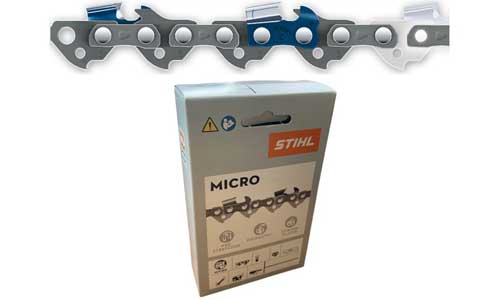
- Premium Chains: Upgrade to Stihl Rapid Super or Picco Super for improved cutting efficiency
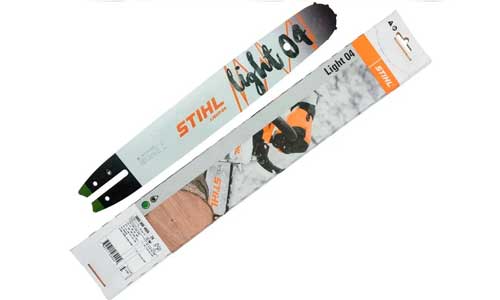
- Lightweight Bars: Reduce fatigue during extended use with Stihl’s lightweight guide bars
- Professional-Grade Two-Stroke Oil: Extends engine life through superior lubrication
Model Comparison Table
| Feature | MS162 | MS172 | MS182 | MS 212 C-BE | MS250 |
|---|---|---|---|---|---|
| Engine Size | 30.1 cc / 1.2 kW / 1.6 bhp | 31.8 cc / 1.3 kW / 1.7 bhp | 31.8 cc / 1.5 kW / 2.0 bhp | 35.2 cc / 1.7 kW / 2.3 bhp | 45.4 cc / 2.3 kW / 3.1 bhp |
| Weight | 3.6 kg / 7.9 lbs | 3.8 kg / 8.4 lbs | 3.9 kg / 8.6 lbs | 4.1 kg / 9.0 lbs | 4.6 kg / 10.1 lbs |
| Max Bar Length | 14″ / 35 cm | 16″ / 40 cm | 16″ / 40 cm | 18″ / 45 cm | 20″ / 50 cm |
| Fuel Capacity | 250 ml / 8.5 oz | 270 ml / 9.1 oz | 270 ml / 9.1 oz | 310 ml / 10.5 oz | 450 ml / 15.2 oz |
| Oil Capacity | 145 ml / 4.9 oz | 165 ml / 5.6 oz | 180 ml / 6.1 oz | 220 ml / 7.4 oz | 250 ml / 8.5 oz |
| Special Features | Basic AVS | Enhanced AVS | QCT System | M-Tronic, ErgoStart, Quick Chain Tensioner | IntelliCarb |
| Ideal For | Occasional Use | Light Regular Use | Regular Use | Frequent Use | Intensive Use |
| Property Size | <1 acre | 1-2 acres | 2-3 acres | 3-5 acres | 5+ acres |
| Max Wood Diameter | 10″ (25 cm.) | 12″ (30 cm.) | 14″ (35 cm.) | 16″ (40 cm.) | 18″+ (45 cm. +) |
| User Experience | Beginner | Beginner-Intermediate | Intermediate | Intermediate-Advanced | Advanced |
Conclusion
Stihl’s homeowner chainsaw lineup offers exceptional versatility across different user needs and applications. By thoughtfully considering your specific requirements for power, frequency of use, and cutting applications, you can select the model that provides the optimal balance of performance, ease of use, and value.
For most homeowners with average-sized properties and moderate cutting needs, the MS182 represents the ideal balance point, it’s powerful enough for most jobs but still lightweight and easy to maintain. Those with larger properties or more demanding applications will appreciate the additional capabilities of the MS 212 C-BE or MS250, For users who want a simple, easy-to-use device for occasional, light tasks, the MS162 or MS172 are perfectly adequate.
Regardless of which model you select, proper maintenance and adherence to safety guidelines will ensure years of reliable service from your Stihl chainsaw. Regular dealer inspections and timely replacement of worn items will maximize your investment and maintain optimal cutting performance.
Stihl Gas Chainsaw Comparison Table for Homeowners (2025)
| Features | MS162 | MS172 | MS182 Best Value | MS 212 C-BE | MS250 |
|---|---|---|---|---|---|
| Engine Displacement | 30.1 cc | 31.8 cc | 31.8 cc | 35.2 cc | 45.4 cc |
| Power Output | 1.2 kW / 1.6 hp | 1.3 kW / 1.7 hp | 1.5 kW / 2.0 hp | 1.7 kW / 2.3 hp | 2.3 kW / 3.1 hp |
| Weight (powerhead only) | 3.6 kg / 7.9 lbs | 3.8 kg / 8.4 lbs | 3.9 kg / 8.6 lbs | 4.1 kg / 9.0 lbs | 4.6 kg / 10.1 lbs |
| Bar Length Options | 12-14 inches | 12-16 inches | 14-16 inches | 14-18 inches | 16-20 inches |
| Fuel Capacity | 250 ml (8.5 oz) | 270 ml (9.1 oz) | 270 ml (9.1 oz) | 310 ml (10.5 oz) | 450 ml (15.2 oz) |
| Oil Tank Volume | 150 ml (5.1 oz) | 220 ml (7.4 oz) | 220 ml (7.4 oz) | 250 ml (8.5 oz) | 300 ml (10.1 oz) |